Showing posts with label growing. Show all posts

Sunday, 5 June 2011

Cordon tomatoes - an experiment

I've always muddled along with tomatoes, never really focusing enough on pinching out and stopping, and ending up in August with an inadequate support for laden plants. This year I'll do better by my plants!
I saw a programme on heritage varieties growing in the Victorian glasshouses at Audley End where the kitchen garden is managed by Garden Organic. Inspired by seeing cordon tomatoes growing up strings, I've decided to try something similar at the allotment.
To make: timber offered by an allotment neighbour and a lady whose dustbins in Putney I was passing, an extra spike sleeve from the hardware shop in the high street for one of the uprights,  baler twine I've had for years, some odd nails and screws. Online I came across a video by an American woman who used a 'spousal unit' in construction. I substituted an etiolated nineteen year old for knocking in of posts and this worked fine.
I think there may be a reason why you don't see this method for out of doors. Maybe wind jars the stems.  Anyway, looking forward to lovely tall plants, allowed to grow as indeterminatley long as a London summer allows.

frame and bind-a-twine
string wound around plant

bow knot that can be adjusted

pegged to ground (pinch out side shoots!)


I have 8 varieties:
Tigrella - Mr Stripey in the US, apparently
Ryder's Midday Sun - Garden Organic Heritage Variety, seeds shared by Master Gardener Claire Benson - blog Claire's Crops
F1 Tomatoberry - heart shaped and really rather expensive seeds
Costoluto Fiorentino - bulging beefy type
Golden Sunrise - seedlings shared with the latest cohort of South London Master Gardeners at their training in April to practise pricking out
Roma - a bush, ie determinate, plum variety
Sweet Olive - a 'grape' tomato, also determinate
Gardener's Delight - classic 'ultimate cherry tomato'
Elsewhere in pots I'm growing Minibel and Tumbling Tom Red.

I have some spare plants if you're local and quick off the mark.  I will have lots of toms to give away too (fingers crossed!)

Thursday, 26 May 2011

Strawberry underworld

strawberry underworld in today's storm
25th April
sprinkle sugar for juice
This blog helps me record variations of the seasons (in a casual way). So just as I blogged about the hard frost we had exactly a year ago - May 26th -, here I am recording allotment neighbour Delta's first strawberry on 10th May.
I feel I neglect my strawberries but they are such do-ers and have converted spring 2011's take-it-for-granted endless sunshine to sweetness and tang in a way I am grateful for. Then today purple skies, sweeping showers and hail - slugs ahoy! Weekend jobs: weeding and nemaslug.

Sunday, 22 May 2011

Bolting


It was the driest April since records began and in London and the southeast the dry has continued into May. This is very serious for farmers (and us all, as food prices will go up further still) and my bolting spinach is hardly a big deal by comparison.  Bolting is a plant's response to dryness or a sudden change in temperature.  The plant aims to flower and set seed  before it dies.  A flowering spike shoots up, often in the space of a couple of days, in a pre-programmed last ditch response to drought. Spinach is prone to bolting, even if you think you're watering carefully, and it's worth looking for bolt-resistant varieties. Typically you sow in early spring and again from August to avoid the dry season.  Anyway, I've lost this lovely variety (from a seed swap, no label, forgotton the name) which was pretty, unusual with its sagittate leaves and tasty.
Nothing to do but take the remaining leaves and toss with a dressing and baby broad beans.  I have sown Florence fennel in its place - also a notorious bolter - but May/June is the time to sow in this case to as cold is the bigger trigger to bolting.

Ladybirds - a good year

So many ladybirds this spring and now into early summer!  I had the 'traditional' seven spot on my peas and encouraged it onto my hand for closer inspection. It didn't want to have anything to do with the broad bean tips where black harlequin ladybirds were tackling juicy looking black fly, and flew off.
My neighbour's plum tree has an aphid infestation and is a veritable ladybird motel. We thought there might be some inter-specific mating going on (see tradtional-looking type on top, top, and black one on top, below!)
Having looked at the ladybird survey I see that they are likely to all be Harlequin ladybirds, the common melanic (black) form and the usual orange one.  They can have up to 21 spots which fuse in different ways, so they can look completely different within the species.  This is an invasive alien species that outcompetes native types.  They still eat aphids, though.

Sunday, 8 May 2011

Early May trug shots - pink and green freshness

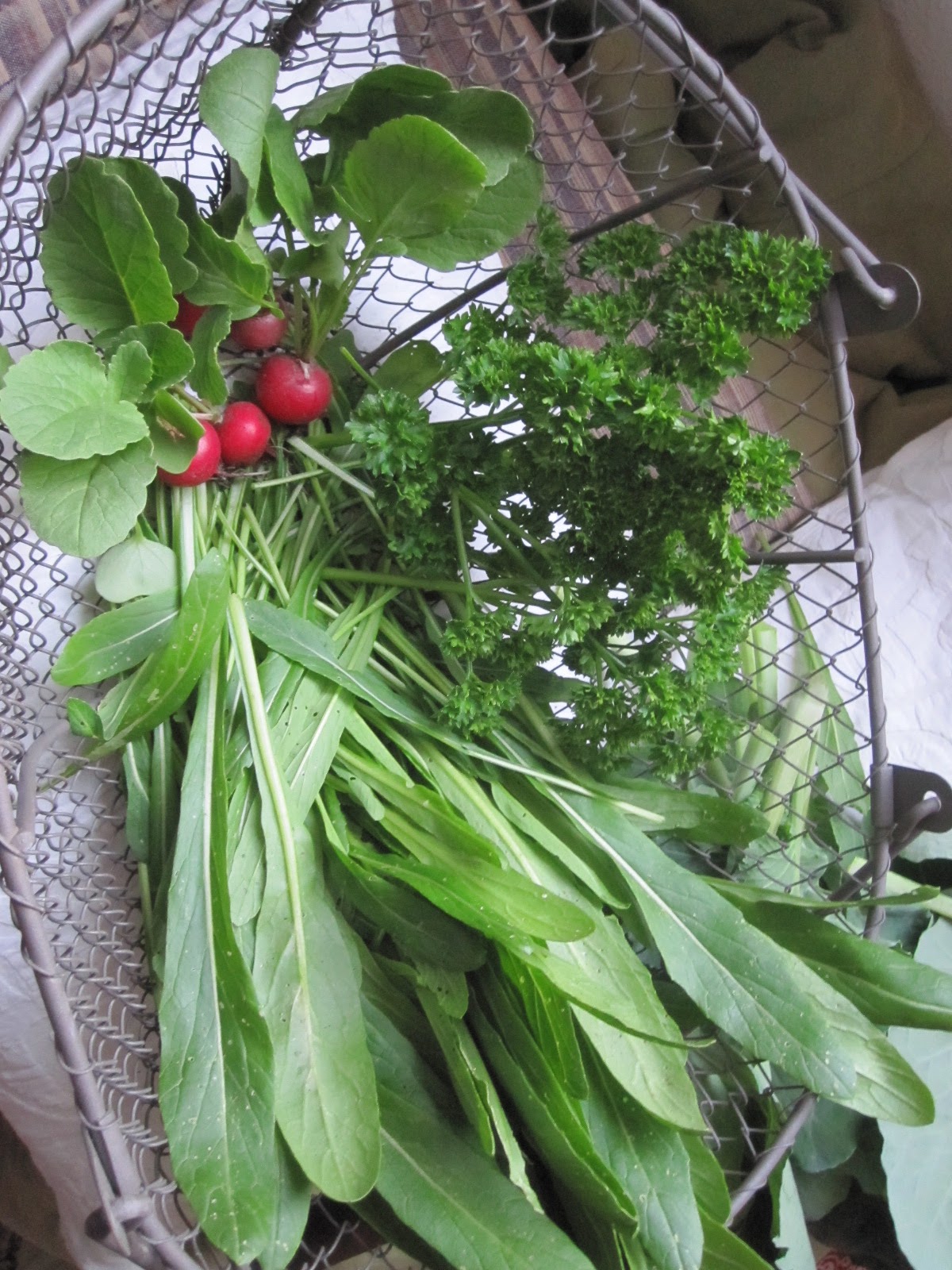
mibuna, radishes and retro curly parsley
so cute -and great weed-suppressing mulch/catch crop
flea beetle starting now but leaves still ok for stirfry
beautifully glaucous; nutritious shredded in stirfy

Tulips from the Big bulb plant and a bunch of oregano

a full on blowsy combo that has given great vase value

frilly textures and champagne rhubarb

Mixed leaves including spinach, tatsoi, mustard greens...

Thursday, 14 April 2011

Wisteria

In Japan, China, and Korea Wisteria naturally grows through trees in moist woodland and by streams, the woody stems twining up to the light.  I have read of tresses of the lilac flowers being seen all down wooded hillsides in Japan, something I'd like to see for myself in time.
Some wisteria are already in flower in London and now is a good time to visit nurseries to choose the blossom colour you want.  There are many lovely varieties - white, pink, lilac, purple - but you can't really rely on a word description to necessarily match your idealised version of the blooms.  Neither modernist nor minimalist it's still a classy plant, originating in Asia, that epitomises the English country garden, and seen here on a Georgian townhouse. The greyish gnarled stems imply a long-established history when formally trained on a building. Less often in the UK (due to lack of space, maybe, and because we also like other climbers like clematis and roses) but more common in Japan is to see the plant trained on sturdily built pergolas where the racemes (tresses of flowers) can hang down.  At Giverny, Monet's garden in Normandy, a wisteria walk on a bridge means the flowers are reflected in the water to stunning effect. Wisteria can also be allowed to naturally scramble its nine metres or more through a suitably large and strong tree.
Wisteria needs full sun or partial shade. It is a member of the pea family, Papilionaceae - the five petals of its flowers, just as those of peas and beans, resemble the four wings and body of a butterfly when opened flat.  As most other members of this family, the roots form nitrogen-fixing bacterial associations, so plants don't really need a lot of fertiliser other than a normal mulch of organic material (one rich in leaf mould - think woodland floor - would be ideal).  If you add a high-nitrogen fertiliser, there will be lots of leafy growth at the expense of flowers.  However, potash is needed to get those lovely great droops of flowers.
Pruning is essential to maximise floriferousness (that's a real word used by horticulturalists). As other woody plants that flower before July, flowers are produced on the previous season's growth and you prune after flowering.  In late July or August, shorten the current season's shoots to 30cm (unless they are to establish framework or replace damaged branches). The flower buds form at the base of these shoots. In late winter, towards the end of the dormant period, cut these shoots back to 5 cm or so (not more) of the older wood. The flowering stems will erupt into growth.


urban - over Leylandii  in Lambeth Walk
Oval cricket ground
beautifying a garage
Wisteria floribunda (from Japan - the Japanese for wisteria is 'fuji') twines clockwise; W. sinensis (from China) anticlockwise.  Most varieties for horticultural sales are crossings and re-crossings of these two species and also W. brachybotrys. Scions (shoots) are grafted onto rootstock. Do not plant any grown from seed as you are likely to be disappointed. Plant so that the union is the ground (see here for general instructions about planting a wall climber). After planting prune back the leading shoot to 90cm above the ground. In the first growing season tie in lateral shoots and cut back sub-lateral shoots to two or three buds. During the first winter cut back laterals by one third and sub-laterals by two or three buds. Repeat this pattern for new growth.

I'm lookng forward to my Wisteria client getting years of pleasure from the wisteria we choose and plant together!

Sunday, 13 February 2011

Blackcurrants - looking back, looking forward

Early July. Mmm...sunshine turned purpley black.  Can you smell it? Then jam made, job done.

Thursday, 10 February 2011

Nigella - mid-summer blues

Fine texture
Blue...
Complements
Variation
Maybe two or three years ago I'd sown Nigella 'Persian Jewels' a freebie from a Sarah Price Chelsea garden, I think.  It has self-sown and fallen out of its selected colours and forms.  It's a little wan now but spectacular in its own feathery way. I it allowed to stay last summer as it complemented the glaucous broad bean leaves. It'll be back.

Sunday, 6 February 2011

Late May - looking back, looking forward

Crimson flowered broad beans
Chard 'White Silver'
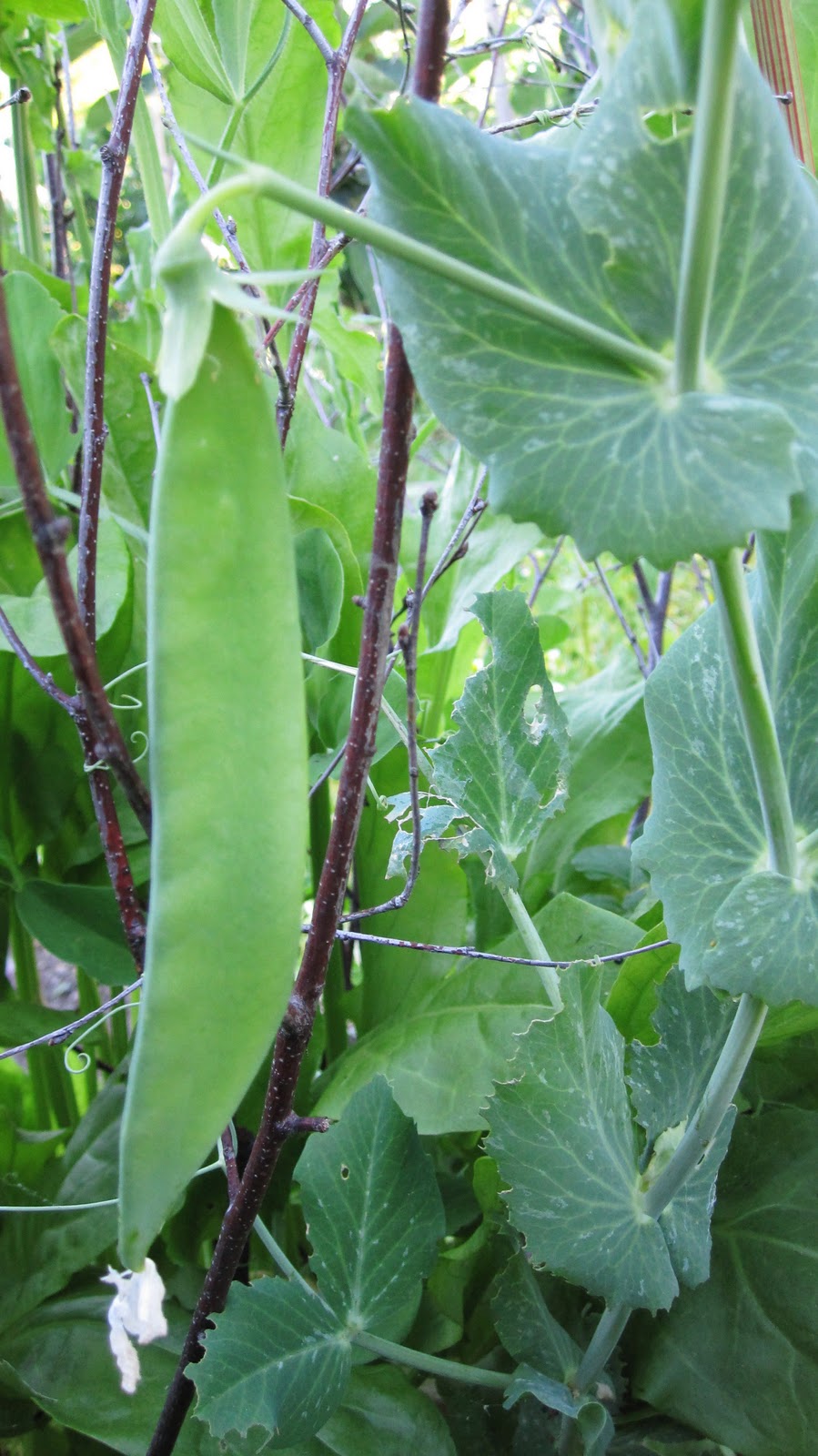
Pea, flower still attached


Beetroot - 'Chioggia', I think.
Viola 'Heartsease' for salads
Stem of bolting sorrel

Early May - looking back, looking forward

As the itch for the new growing season becomes almost unbearable, I'm reviewing last year's pictures. May.
Seedlings. New wire baskets with amaranth and coriander seedlings. And the lovely concertina  shredded cardboard packaging the baskets came in - perfect for the compost bin.
A brassica seedling under protection.


Strawberries in flower
Blueberries in flower
Berries to be.  I had contemplated pulling out the strawberries, as they only give a handful at a time and are a slug magnet.  Better to support our Kent growers who always seem to have to discount enormously at the supermarket? But they look so lovely here. Blueberries. Originally I planted three varieties for successional, but this one bush has done best on London clay. I haven't been able to bring myself to add peat for the acid conditions preferred. Would have been handy to leave the labels on...
Honesty - Lunaria annua

May flowers
Cottage garden flowers for wildlife. Honesty, a biennial despite the latin name, had self seeded and provided a gorgeous display for the best part of a month.  I grew it because birds are supposed to eat the seeds in the 'moon' pods (not!). I 'allow' myself this section of herbaceous perennials in a section with a wildlife attracting aim.  Here, white and violet honesty, with colombines in the foreground. Also, the blue-flowered weeds of forget-me-not and alkanet which persist however much you pull them out - the former by seeding profusely, the latter by having a brittle tap root.

Saturday, 8 January 2011

Parsnips and earthworms

The soil was soft today and I forked out the last of the parsnips for Sunday lunch tomorrow.  I include a pen in the picture so you can see what whoppers some have been.  I only did one sowing so I suppose the variation in size is due to different germination rates.  I haven't quite learned parsnips' ways yet.  They are, as the books tell us, slow to germinate.
I put in a catch crop of chard in between the parsnip lines to remind me not to sow there, and to get something out of the space 'til the parsnip leaves came up.
You must sow fresh parsnip seed every year, again, as the books say.  It hardly seems worth testing this with last year's seed, as there's enough wondering will they/won't they as it is.
It was gratifying to see some really juicy big earthworms. They would have been too much of a mouthful for the current robin that is bobbin' about. There was a nice crumbly soil structure.  However, forking over the patch for a full investigation will have disrupted the soil ecology. I put a mulch of strawy manure on top to protect what is left of it from rain, and for the worms to drag down.  Sorry there no pictures of the worms here, but there's a really nice identification guide at the natural history museum site, British earthworm slideshow, and this survey project looks like something to follow up, UK earthworm survey.
Lastly, I'm looking forward to seeing Cleve West's parsnip flowers in his Chelsea garden this May, Cleve West video

Friday, 20 August 2010

Sowing leaves in August and September to enjoy through the autumn and into winter

By the end of July you've harvested a lot of spring-sown crops, and can see that (maybe) your tomatoes will ripen. There's a sort of 'what now' feeling as it all starts to go over and feel a bit tired in your growing space.  Fear not!  There is lots to sow now to ensure satisfying growing and healthy eating through the autumn and winter.  See this link and pdf table on the Master Gardener website for a range of salads and other veg, crops to sow August onwards.
Here, I'll focus on chard and kale - specifically cavolo nero - which are super easy and will give you cut and come again crops through autumn and into the winter.  They withstand frost and, though they obviously won't grow very fast in the cold and short days, they may well come through into spring and give you an early burst of fresh leaves.  At a certain point you'll put the plants on the compost heap, but by then you'll have spring seedlings to put out. Here (right, top left) are some April pictures of seedlings earlier this year.
The cavolo nero grew up, partnered by pot marigold 'Porcupine', left, and a yellow-stemmed chard is pictured in a basket above with broad beans, spinach, fennel and nigella flowers from early June.
These are nice-looking plants year round. Cavolo nero and curly kale look very pretty in the frost.  Chard stems can be white, yellow, lime green, orange or red.  You can be minimalist and go for white stems only, but varieties like 'Bright Lights' give you a whole range of colours which are very vibrant, particularly when the winter sun is low in the sky. I like the bluey wrinkled leaves of cavolo nero and chose to contrast that with the orange marigolds, and later orange zinnias (which turned out to be pink). Chard is always pleasingly glossy.You can shred either and stir in with pasta to wilt, or stir-fry, or add to soups. People always talk about the earthy taste of chard which is maybe a bit off-putting, but it's just lovely.  Kale is a little bit bitter - I like that - but you cook it with tomatoes, carrots, other sweet root veg, so that taste is complemented. 
Lastly, both are full of folate, essential for good health.  Maybe someone out there can comment with info on the nutrients. Would love to hear from you!

Master Gardener Project with Garden Organic

It really looks like the grow your own fruit and veg movement is unstoppable.  Garden Organic is promoting it with the Master Gardener project. Volunteers support local households to grow their own. Master Gardener is in a few UK areas at the moment and is due to roll out nationally next year.
We South London volunteers had initial training in June and have been recruiting our target ten households over the summer. Here are two of my colleagues, Jake at the Streatham Festival and Stephanie at the Lambeth Country Fair (right).

My experience is that many people want or, when you get talking, really yearn to grow fruit and vegetables.

I was lucky enough to be invited to do a workshop at a nearby community garden.  The residents are already successfully raising crops such as broccoli, beans and carrots, but have a great thirst to know more.  Here we were sowing oriental greens to crop before winter. 

It's been a brilliant opportunity for me to meet other people growing veg locally, to share knowledge and to have fun.  I'm looking forward to working with 'my' households over the next 12 months.
 
To get your own master gardener, or to volunteer as a master gardener go to mastergardeners.org.uk.