Showing posts with label mulch. Show all posts

Sunday, 8 May 2011

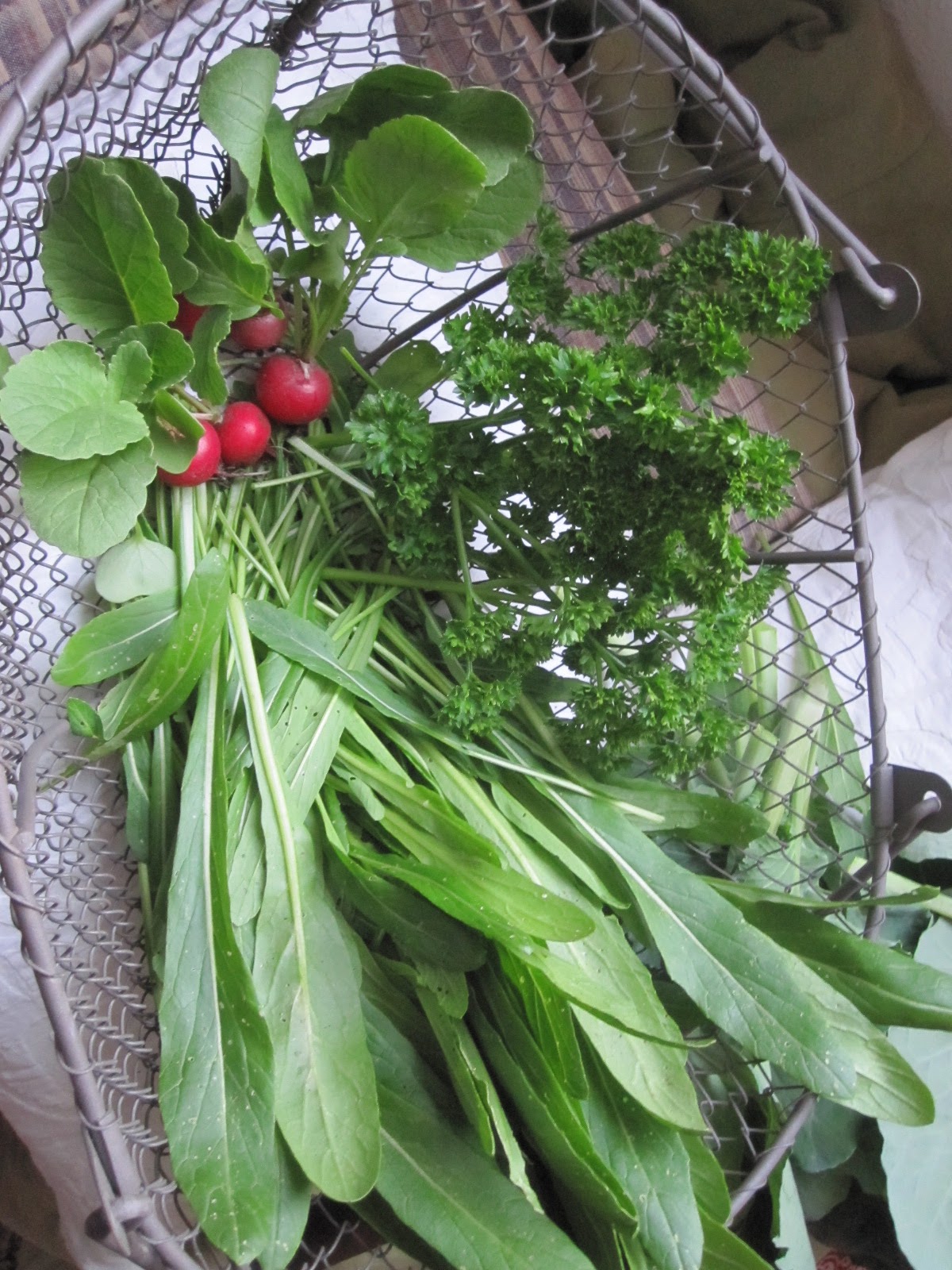
Early May trug shots - pink and green freshness

mibuna, radishes and retro curly parsley
so cute -and great weed-suppressing mulch/catch crop
flea beetle starting now but leaves still ok for stirfry
beautifully glaucous; nutritious shredded in stirfy

Tulips from the Big bulb plant and a bunch of oregano

a full on blowsy combo that has given great vase value

frilly textures and champagne rhubarb

Mixed leaves including spinach, tatsoi, mustard greens...

Sunday, 7 June 2009

Rows and rows

It's always worth listening to more experienced gardeners, even if you don't 'hear' the pearls of wisdom straightaway. Kate, who does other people's gardens, observed how the quality of the soil makes such a difference.

I took over the land where this raised bed is two to three years ago. I've mulched as much as I can with my own meagre returns of compost -relatively small amounts but super-rich. I really feel the patch has turned a corner in terms of fertility this year. It seems to be full of life. It took Kate's comment for me to notice and 'click' with this patch.

From the top:
Spinach 'Matador' - Food Up Front www.foodupfront.org
Carrot 'Primo' - I think, from a friend in a seed swap
Escarole 'Cornetto di Bordeaux' - Franchi sementi. Always interesting continental varieties; usually expensive but a really big packet, so good to share http://www.seedsofitaly.com/
French parsley - Tuckers Seeds http://www.blogger.com/www.tuckers-seeds.co.uk
Beetroot 'Boltardy' - Suttons seeds and top-selling variety for a reason. Homegrown beetroot is so sweet and buttery of texture.
Baby leaves are great in salad.
Rainbow chard - seed swap. This is ready to eat, 10 - 15cm; too 'chardy' when bigger
Broad bean - March-sown 'Witkiem Manita', Tuckers. Charming picotee edge from some member of the munch bunch. Nowadays I not only pinch out black-fly prone apical (top) bud, but also later on de-budded top part of the stem if black fly come back. It concentrates the plant on the flowers and forming beans it has anyway.


Thursday, 14 May 2009

Silver birch stems

Inspired by the grove at the end of the Serpentine path at Anglesey Abbey near Cambridge, I recently used birch in a couple of student designs. Silver birch gives good year round value: shining stems in winter with a tracery of black twigs, fresh green leaves in spring that darken to provide dappled shade in summer, and buttery yellow leaves in autumn. Here you see them photographed on May 3rd, with new-ish leaves and an underplanting of small tulips. I've seen winter photos with just a dark mulch, all the better to contrast with the white. It is a stunning effect when you turn the corner to enter the grove and there's a strong sense of place.
Betula utilis var. jacquemontii, the Himalayan birch. Eventual height 18m. Moderately fertile soil in full sun or dappled shade.
I'm not sure if those at Anglesey are a cultivar, but 'Doorenbos' reaches a more manageable 7.6m in 20 years, with an eventual height of 12m. It suitable for the smaller garden, but even a small and slender tree such as this birch should be planted a good distance from a house (root damage, falling). 'Doorenbos' has the Royal Horticultural Society's Award of Garden Merit, evidence of having been trialled and found to have both horticultural and aesthetic value. AGM plants tend to be readily available in garden centres or from suppliers. These stems had been cleaned - you just need water and a soft brush to remove dust and algae.

Poached Egg Plant

'Do you grow it for joy of it?', asked my new friend on visiting my allotment. Yes! The yellow and the white make a shining, joyful carpet at the moment.

I grow it for lots of other reasons too. Hoverflies and bees love to visit and they pollinate the nearby raspberries and the pixie Bramley apple they grow under. The plants make a green mulch overwinter, protecting the soil from battering, nutrient draining rain. The faded leaves add organic matter. They self-seed one year to the next and look after themselves. Lastly, it's one of the many plants that reminds me of my granny.

Limanthes douglasii. 15 x 15cm. Full sun in most soils. Poached Egg plant is a hardy annual that you can grow from seed in Spring or early Autumn direct into the ground. The seeds are readily available at garden centres or catalogues.

My new friend is the neighbouring street rep from Food Up Front, http://www.foodupfront.org/