Sunday, 13 February 2011

Zinnnia - looking back, looking forward - August, September

Zinnia, fennel and bupleurum - all from annual seed
Zinnia with dahlias

August harvest - looking back, looking forward

Blackcurrants - looking back, looking forward

Early July. Mmm...sunshine turned purpley black.  Can you smell it? Then jam made, job done.

Thursday, 10 February 2011

Thrive - ornamental and edible containers

Cabbage, poppies (field and Californian), sage
Some great ideas for combining colour last June at the Thrive garden in Battersea Park. Thrive is a charity supporting social and therapeutic horticulture.
Ruby chard and veronica
Rocket, oakleaf, oregano, Russian sage
Tagetes, oakleaf lettuce and beans

Nigella - mid-summer blues

Fine texture
Blue...
Complements
Variation
Maybe two or three years ago I'd sown Nigella 'Persian Jewels' a freebie from a Sarah Price Chelsea garden, I think.  It has self-sown and fallen out of its selected colours and forms.  It's a little wan now but spectacular in its own feathery way. I it allowed to stay last summer as it complemented the glaucous broad bean leaves. It'll be back.

Silver

Eryngium bourgatii - stellar
Onopordum acanthium - three thistley ghosts

My (male) neighbours at the allotment find space to grow some striking, spikey ornamentals, pictured here in mid-June.

Eryngium is a clump-forming perennial about 50cm high, so this view of its stellar bracts can be made a point of interest. If you plant it by a path, feel confident your guests will have their gardening trousers on. Hardy, so long as it's on free-draining soil. 

The Scotch thistle - a native plant and un-cultivared - being up to 3m tall, is often placed at the back of a traditional herbaceous border. Here it is displayed in all its glory, making full use of the toning mortar and contrasting brick behind it. It's a biennial that successfully self-seeds (such fun for weeding) and does well against this south-ish facing wall on unimproved soil

Sunday, 6 February 2011

Late May - looking back, looking forward

Crimson flowered broad beans
Chard 'White Silver'
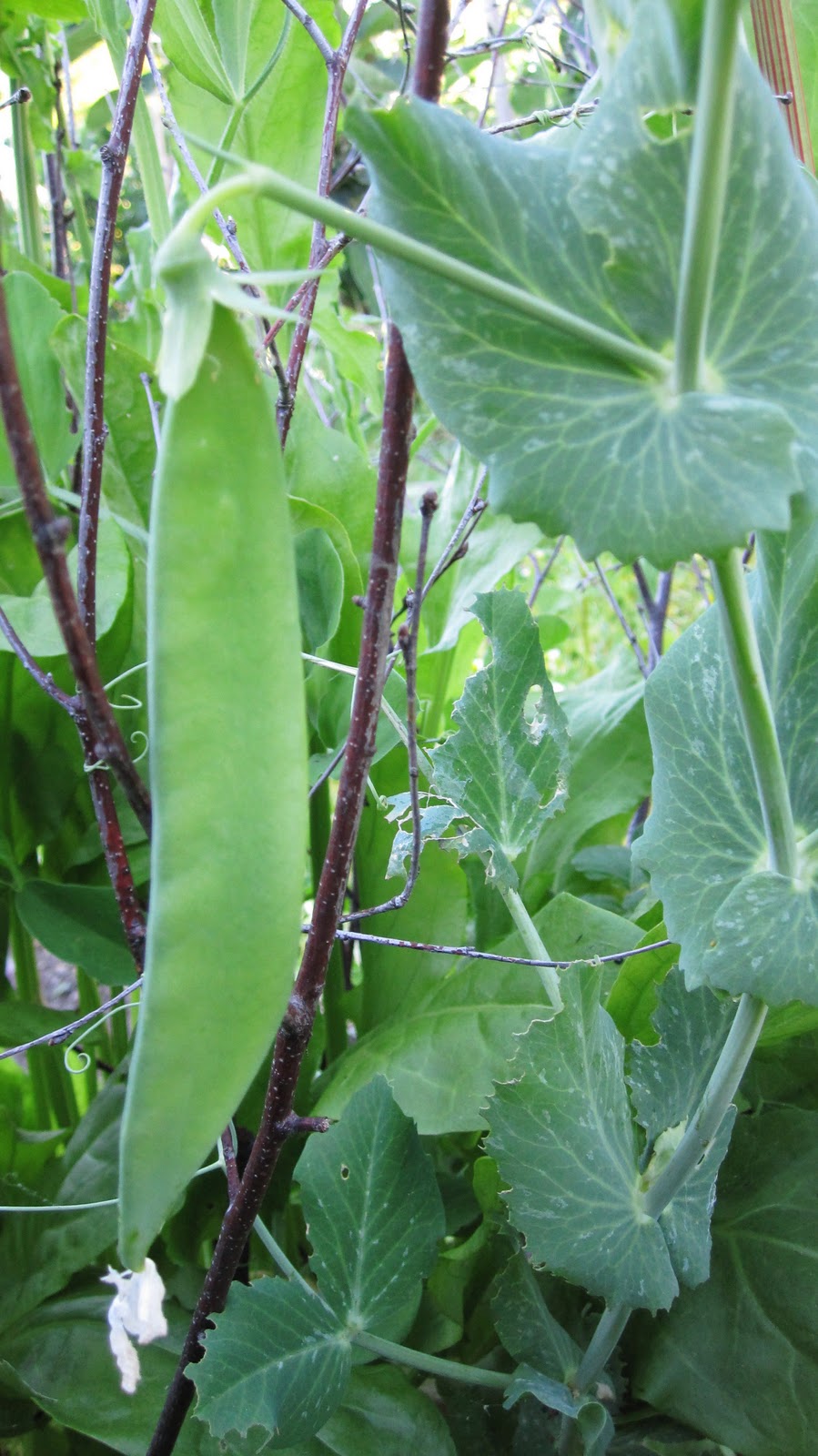
Pea, flower still attached


Beetroot - 'Chioggia', I think.
Viola 'Heartsease' for salads
Stem of bolting sorrel

Early May - looking back, looking forward

As the itch for the new growing season becomes almost unbearable, I'm reviewing last year's pictures. May.
Seedlings. New wire baskets with amaranth and coriander seedlings. And the lovely concertina  shredded cardboard packaging the baskets came in - perfect for the compost bin.
A brassica seedling under protection.


Strawberries in flower
Blueberries in flower
Berries to be.  I had contemplated pulling out the strawberries, as they only give a handful at a time and are a slug magnet.  Better to support our Kent growers who always seem to have to discount enormously at the supermarket? But they look so lovely here. Blueberries. Originally I planted three varieties for successional, but this one bush has done best on London clay. I haven't been able to bring myself to add peat for the acid conditions preferred. Would have been handy to leave the labels on...
Honesty - Lunaria annua

May flowers
Cottage garden flowers for wildlife. Honesty, a biennial despite the latin name, had self seeded and provided a gorgeous display for the best part of a month.  I grew it because birds are supposed to eat the seeds in the 'moon' pods (not!). I 'allow' myself this section of herbaceous perennials in a section with a wildlife attracting aim.  Here, white and violet honesty, with colombines in the foreground. Also, the blue-flowered weeds of forget-me-not and alkanet which persist however much you pull them out - the former by seeding profusely, the latter by having a brittle tap root.

Sunday, 16 January 2011

Mid-January Mid-blue Mad

Amazing log on Tooting Common.  On inspection the paint did not appear to be any kind of wood treatment, but some individual's expression. Possibly the owner of these obelisks in front of this house facing the space? But such a different mindset. The paint has a beautiful patina that contrasts intriguingly with the bark.
Clematis seedheads and twig buds

Sky palette
The blue chimed in my mind with this ensemble from Phobe Philo's spring/summer collection that had had me getting out the sewing machine.Then I went mid-January mid-blue mad with my camera phone out and about in Wandsworth.

Saturday, 8 January 2011

Parsnips and earthworms

The soil was soft today and I forked out the last of the parsnips for Sunday lunch tomorrow.  I include a pen in the picture so you can see what whoppers some have been.  I only did one sowing so I suppose the variation in size is due to different germination rates.  I haven't quite learned parsnips' ways yet.  They are, as the books tell us, slow to germinate.
I put in a catch crop of chard in between the parsnip lines to remind me not to sow there, and to get something out of the space 'til the parsnip leaves came up.
You must sow fresh parsnip seed every year, again, as the books say.  It hardly seems worth testing this with last year's seed, as there's enough wondering will they/won't they as it is.
It was gratifying to see some really juicy big earthworms. They would have been too much of a mouthful for the current robin that is bobbin' about. There was a nice crumbly soil structure.  However, forking over the patch for a full investigation will have disrupted the soil ecology. I put a mulch of strawy manure on top to protect what is left of it from rain, and for the worms to drag down.  Sorry there no pictures of the worms here, but there's a really nice identification guide at the natural history museum site, British earthworm slideshow, and this survey project looks like something to follow up, UK earthworm survey.
Lastly, I'm looking forward to seeing Cleve West's parsnip flowers in his Chelsea garden this May, Cleve West video